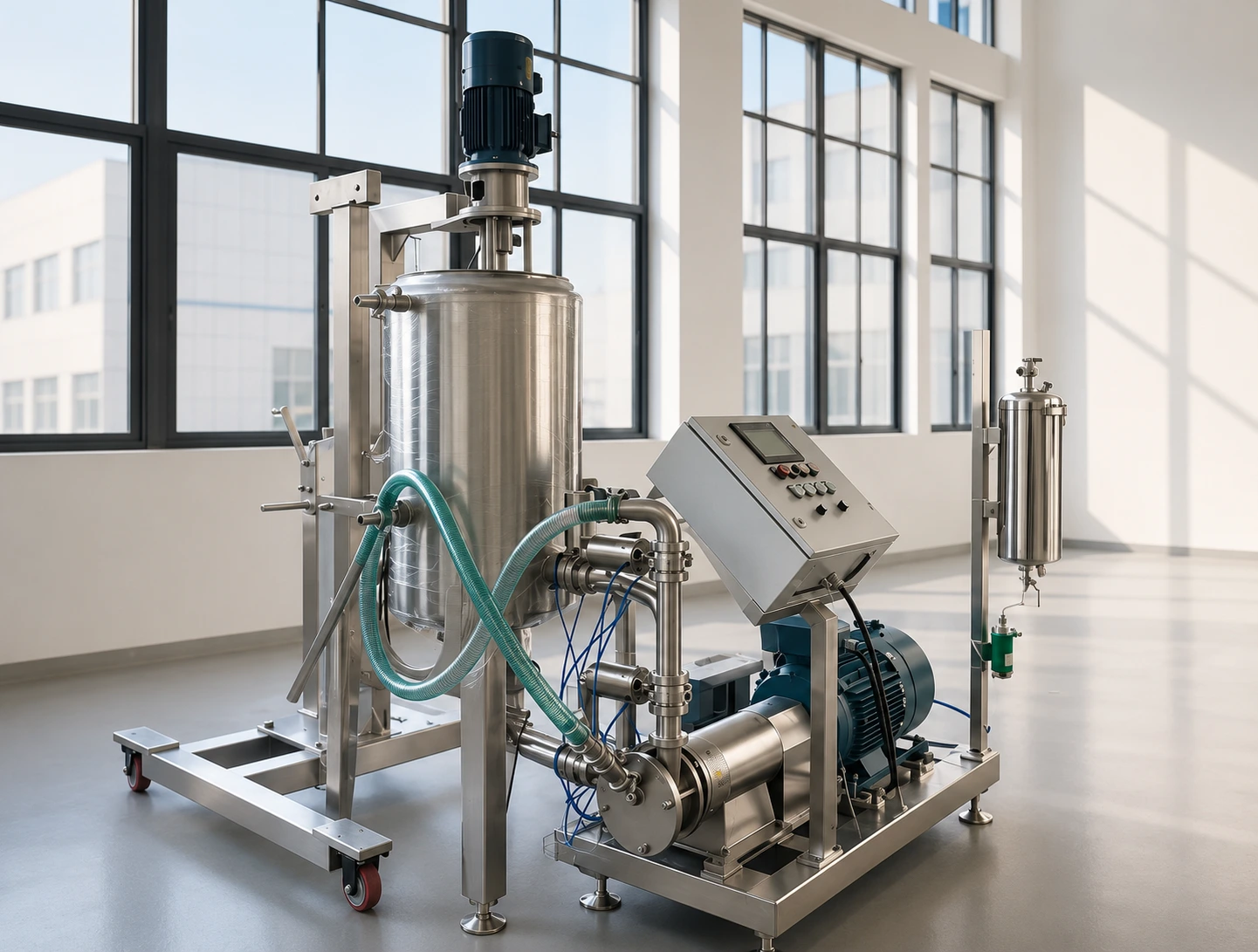
High-Shear Dispersion System

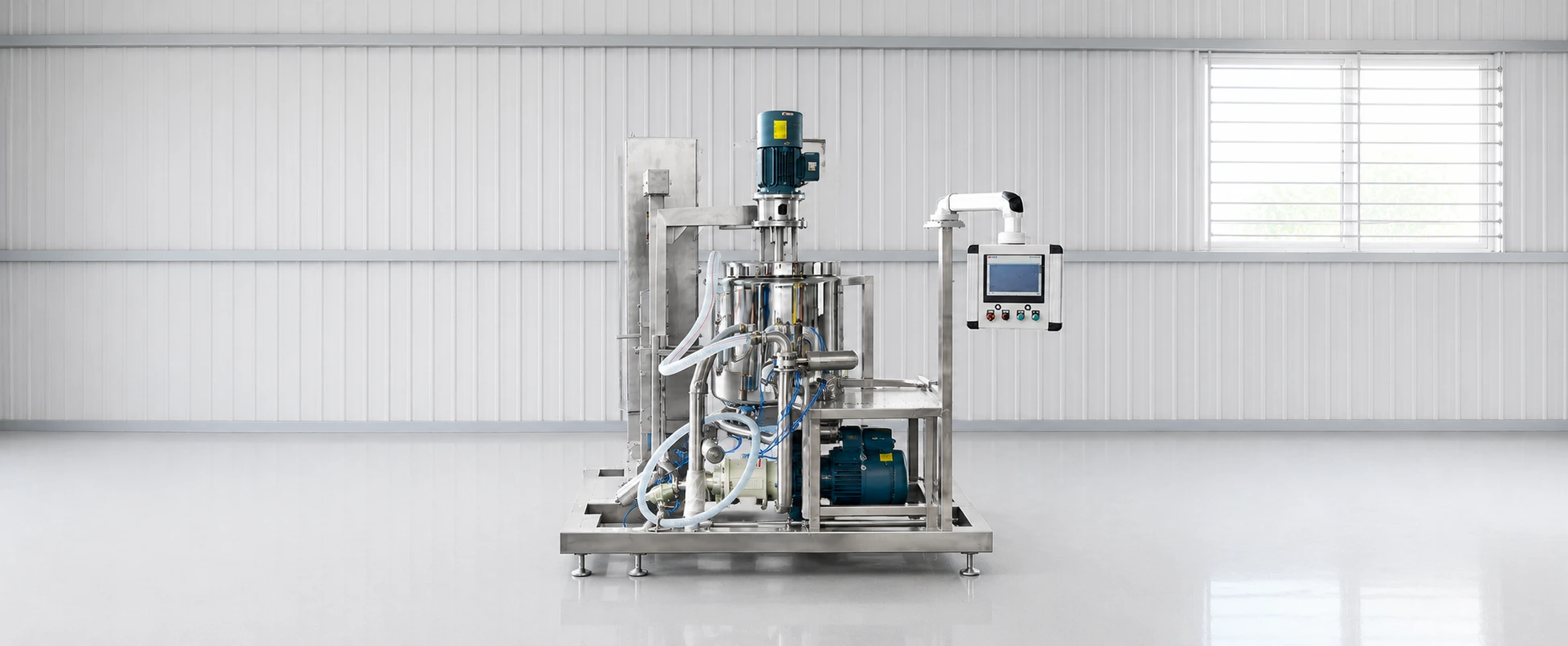
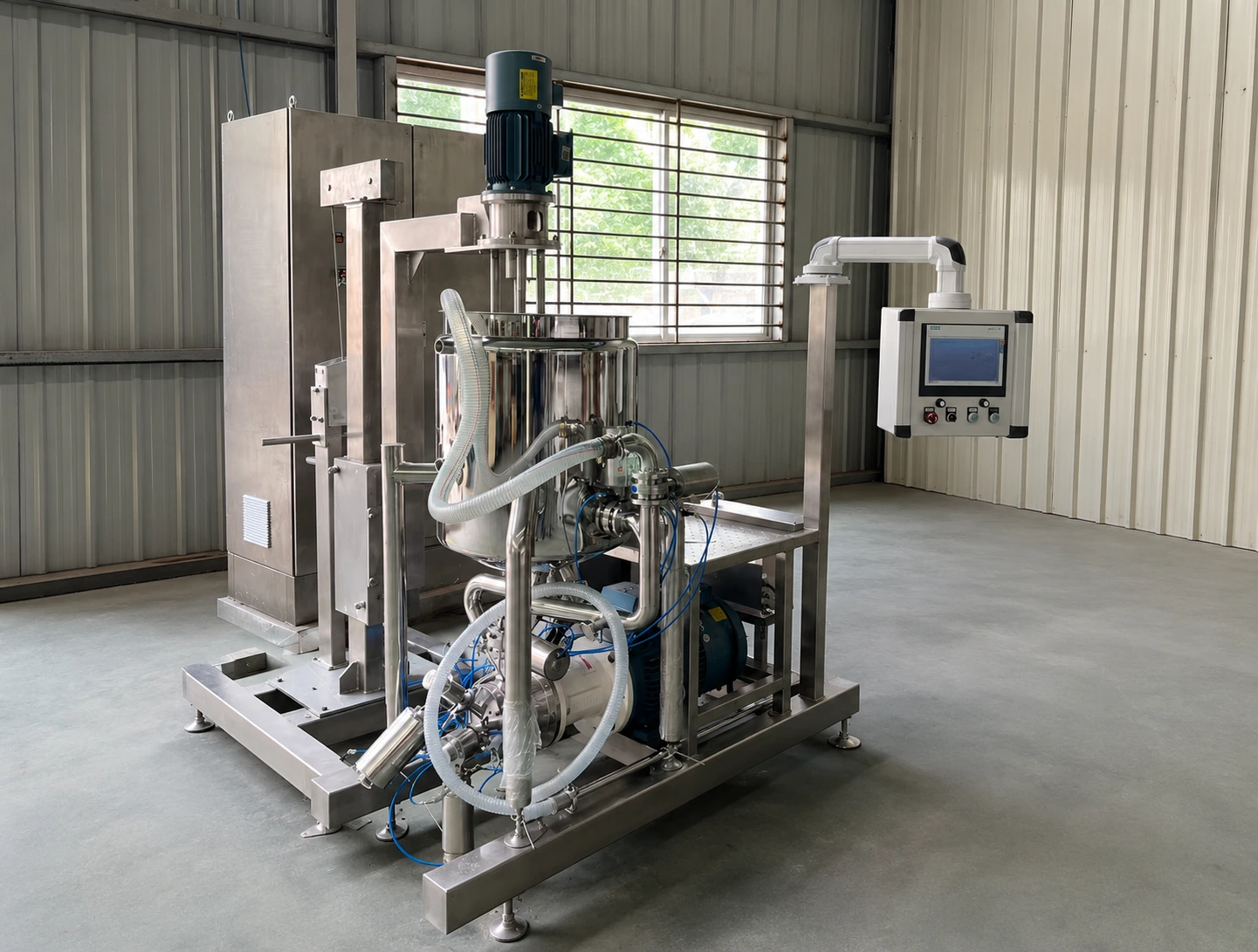
Rotor-stator design, modular configuration, covering lab to full-production models.

High-Shear Dispersion System

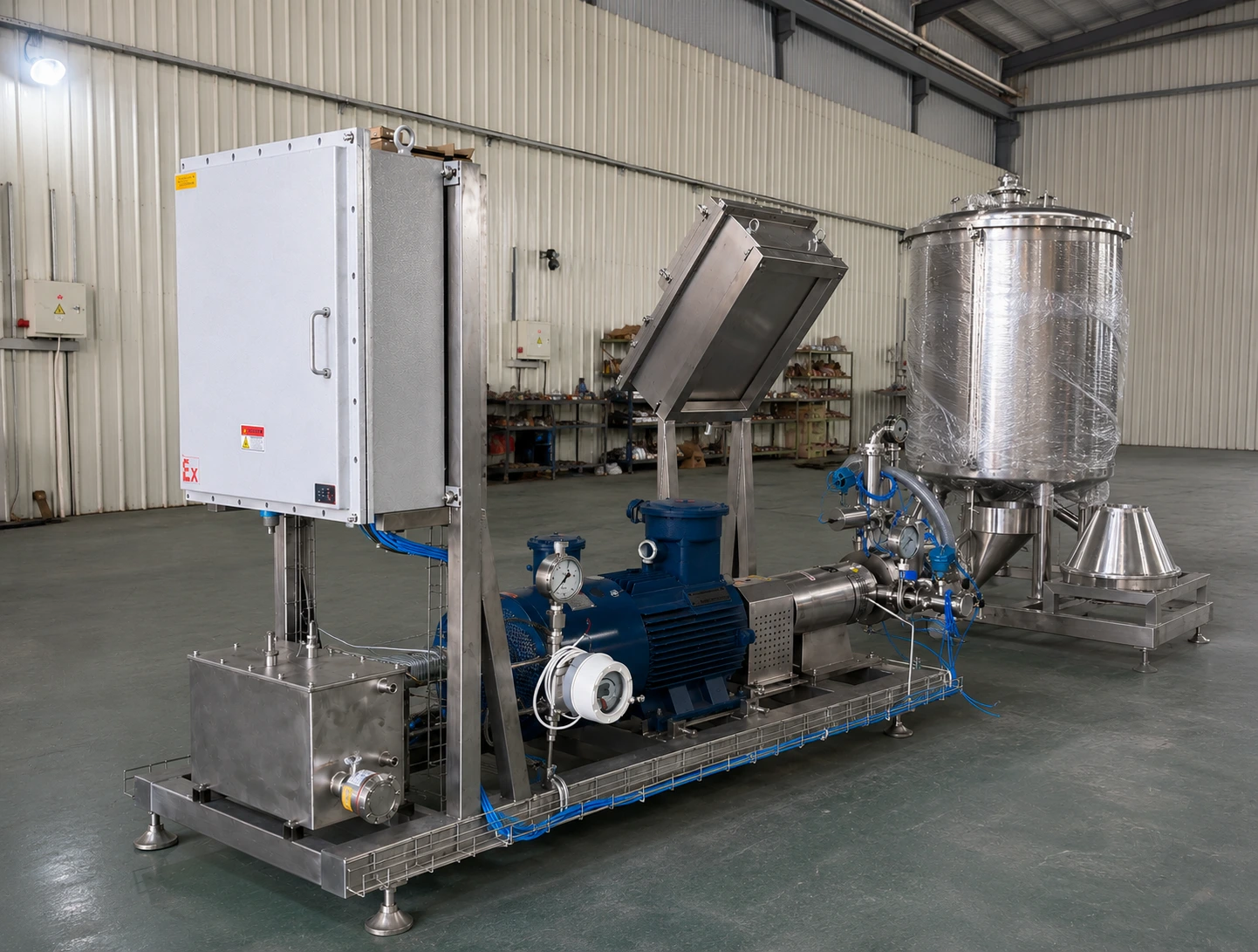
A modular concept that flexibly combines functional units — big-bag discharge station, high-shear disperser and reactor.

01
Big-bag discharge station
Automatic FIBC discharge, negative-pressure dust-tight sealing
02
High-shear disperser
Rotor-stator design, lab to full-production models
03
Reactor
Heating/cooling jacket, adjustable agitation
Lab validation · Material testing

10+ years of real process experience
bring your material for testing

We have our own lab- and pilot-scale machines and welcome customer material trials. Over the past decade we have processed many raw materials — titanium dioxide, carbon black, fumed silica and more — handling fumed-silica aqueous dispersions up to 60% solids. Get in touch!
Titanium dioxide TiO₂Carbon blackFumed silica SiO₂Up to 60% solids
Contact Us
01 / 04 高剪切分散机 01
02 / 04 高剪切分散机 02
03 / 04 高剪切分散机 03
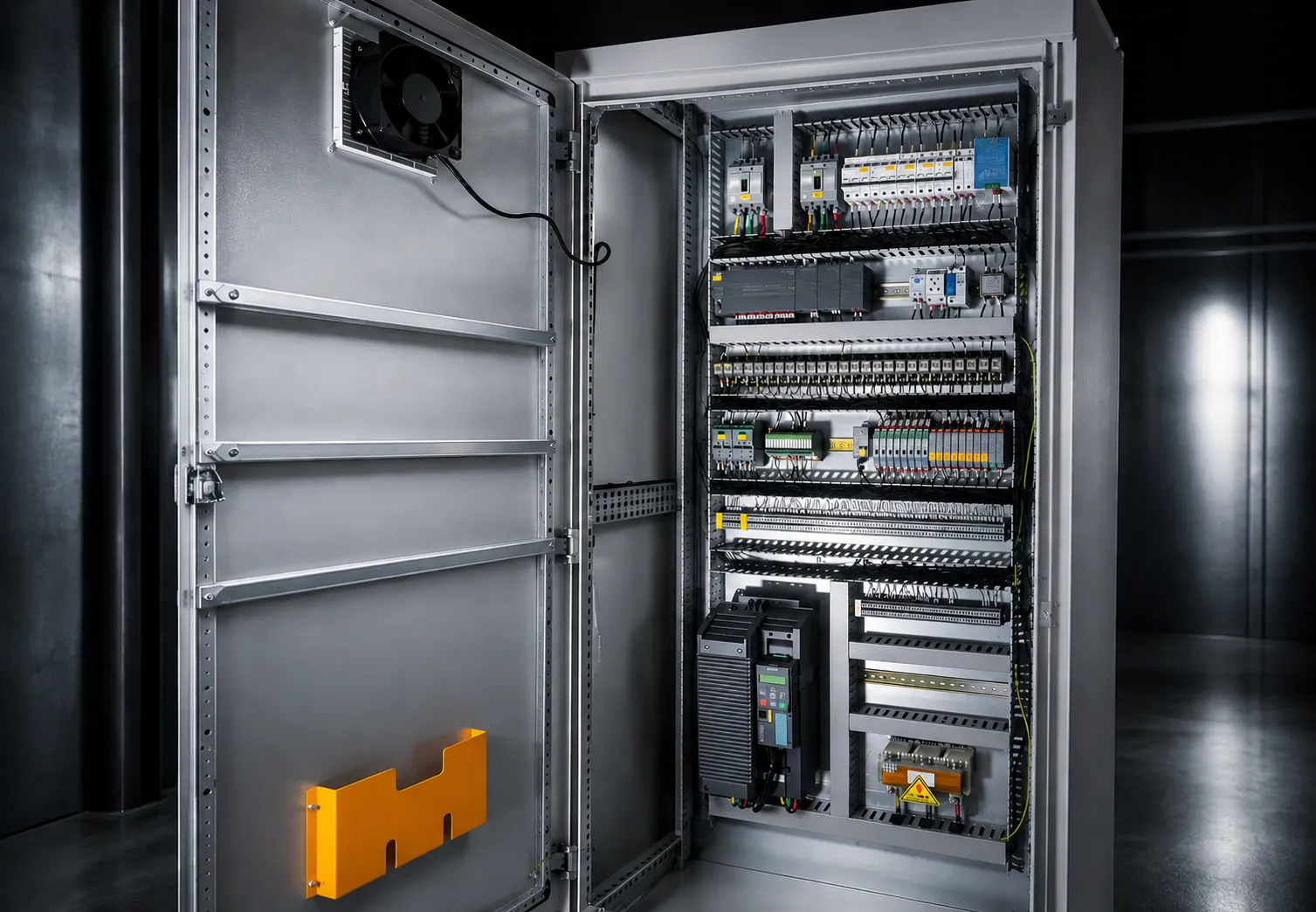
04 / 04 电气控制柜
FAQ

High-shear dispersion — what you may want to know

A conventional agitator generates axial flow via impeller rotation — shear forces are weak and only sufficient for blending. A high-shear disperser (rotor-stator design) creates an extremely narrow shear gap (typically 0.2–1 mm) between rotor and stator; tip speeds reach 15–40 m/s, producing shear forces tens to hundreds of times greater than a conventional agitator. This breaks nano-particle agglomerates down to primary particle size. These machines are also commonly called 'powder induction mixers' — at high rotational speed they draw dry powder directly into the liquid and instantaneously wet and deagglomerate it, eliminating floating powder and lumps.
The key question is whether the material requires particle size reduction, deagglomeration, or emulsification. Suitable applications include:
  • Nano powders: fumed silica, nano calcium carbonate, nano TiO₂
  • Coatings & pigment pastes: waterborne/solvent-borne paints, pigment grinding
  • Battery slurries: cathode materials, conductive carbon pastes
  • Other: agrochemical emulsions & suspensions, cosmetic emulsions, food & beverage homogenisation, polymer solutions
Selection depends on three parameters — pre-production lab trials or pilot tests are strongly recommended before purchasing.
  • Batch volume: BONAFEI units range from laboratory 1 L to production 500 L+, corresponding to 0.75 kW–90 kW.
  • Viscosity: higher viscosity (>5000 cP) requires higher power to maintain rotor tip speed.
  • Target particle size: for D₅₀ targets below 1 μm, recirculating grinding mode is recommended.
  • Continuous (inline): material is pumped in at one end and discharged continuously from the other — ideal for high-volume, consistent-formula production. Shear passes can be adjusted via flow rate.
  • Batch (immersion): the disperser head is immersed directly in a batch tank — flexible for small batches and frequent product changeovers.

BONAFEI supplies both types, and also offers combined solutions: in-tank pre-dispersion + inline fine-grinding for optimum efficiency and particle-size consistency.

Yes. BONAFEI operates a laboratory (lab-scale) and a pilot system (pilot-scale) in Xiamen. Customers can send material samples; engineers develop process parameters and issue a particle size distribution (PSD) report to ensure scale-up consistency. This service is provided free of charge to prospective customers.
The high-speed rotor generates extreme tip velocity and high-frequency mechanical action. Material passing through the narrow gap between rotor and stator is subjected to intense shear, centrifugal compression, fluid-layer friction, and impact forces, causing immiscible solid, liquid, and gas phases to disperse and emulsify uniformly within a very short time.
Different stator heads suit different process requirements:
  • Screen/mesh stator: mixing and low-viscosity emulsification — high circulation rate, ideal for light emulsions
  • Slotted stator: medium-fineness particle size reduction — balanced shear and circulation, versatile for most applications
  • Round-hole stator: coarse particle comminution and high-viscosity mixing — optimum axial flow for viscous materials
High shear means high energy input — friction inevitably generates heat. If overheating is abnormal, check:
  • Viscosity: does the material exceed the equipment's rated viscosity range?
  • Run time: has the unit been running continuously without cooling breaks?
  • Solution: use a jacketed mixing tank with chilled water or refrigerant for temperature control.
  • Never run dry: high-shear mechanical seals (especially double-face seals) require a cooling/lubricating fluid (water or white oil). Always confirm circulation is running before start-up.
  • Check wear: if cooling is normal but leakage persists, rotating and stationary seal faces or O-rings may be worn — replace seal components promptly.
  • Insufficient speed: not reaching the critical shear rate required by the material.
  • Insufficient process time: extend dispersion time or increase circulation passes.
  • Dead zones: high-viscosity materials may require an anchor/wall-scraper agitator to push edge material into the central high-shear zone.
Suitable for dust-free discharge of bulk-bag (500 kg–2000 kg) powders or granules across chemicals, pharmaceuticals, food, and construction materials industries — examples include resin powders, carbon black, flour, cement, and additives.
Bridging is typically caused by poor material flowability. Remedies include:
  • Activate the pneumatic vibrator / massage pads — knead the bag from the side or bottom to break the bridge.
  • Start the vibrating hopper motor at the base of the unloading station to promote flow.
  • Check the fluidising disc or break-arch air jets for normal operation.
  • Dual-clamping valve / bag press mechanism: ensure the big-bag spout is tightly sealed against the discharge tube.
  • Enclosed discharge valve: confirm the access door is closed before untying the bag spout.
  • Connect to dust extraction system: the negative-pressure dust extraction system must be activated before unloading commences.
  • Loss-in-weight (LIW): mount the entire unloading station on load cells; precise dosing is achieved by monitoring the reduction in total weight.
  • Gain-in-weight (GIW): connect a weigh hopper below the unloading station; dosing is based on the weight of material entering the hopper.
Custom Solution

Need a dispersion system tailored to your line?

We respond within 24 hours on business days.

Contact Us

扫码添加微信

微信 / WhatsApp:+86 186 5071 2596